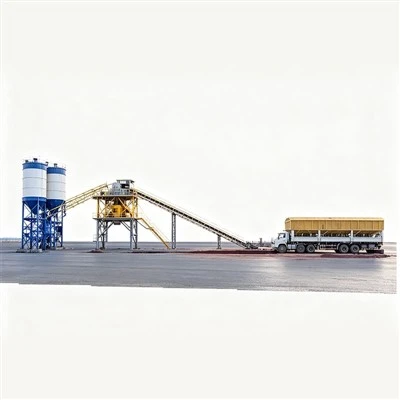
If you’ve ever stood at a construction site watching a team pour concrete for a new bridge, residential foundation, or road extension, you might have wondered: How do they get that perfectly mixed concrete exactly when and where it’s needed? For projects that are too large, remote, or time-sensitive to rely on ready-mix trucks driving miles from a central plant, the answer is an on site concrete batching plant. As a supplier of these purpose-built systems, I’ve fielded this question more times than I can count from project managers, general contractors, and even small construction crews just starting out. The truth is, there’s no one-size-fits-all answer to “how long does it take to set up an on site concrete batching plant?”—it depends on a mix of equipment type, site conditions, project specs, and local regulations. Over the years, I’ve seen setups take as little as three days for a small portable unit and as long as six weeks for a full-scale permanent system. Let’s break down what actually goes into the timeline, so you can plan your next project without unexpected delays.
First, it’s critical to distinguish between the types of on site concrete batching plants, because their setup processes are wildly different. For example, a Mobile Batch Mix Plant is designed to be transported on standard flatbed trucks, with pre-assembled components that lock together like oversized puzzle pieces. This is the go-to for small to medium projects, like housing developments or road repair stretches, where the plant might only be needed for a few months. On the other end of the spectrum, a Ready Mixed Concrete Mixing Plant (though usually central) can have mobile variants too, but for large-scale infrastructure like dams or high-rise foundations, you might opt for a Central Mix Batch Plant that requires more ground preparation. If your project is focused on precast concrete elements—like concrete blocks, pipe segments, or retaining wall panels—you’d use a Precast Concrete Batch Plant, which has specialized mixing and curing systems that add to setup time. The core system most people refer to when they say “on site concrete batching plant” is the unit that mixes concrete directly at the worksite, eliminating wait times for ready-mix trucks and reducing material waste from over-ordering. That’s the one we’ll focus on here, but understanding these variants is key to estimating your timeline.
Let’s start with the shortest possible timeline: a mobile, small-capacity on site concrete batching plant for a temporary project. I recently worked with a crew building a 50-unit affordable housing development in a rural area of Ohio, where the nearest ready-mix plant was 45 minutes away. They rented a compact mobile plant from our team, and the setup process started on a Monday morning. First, we had to prepare the site: they cleared a 20x30 foot area of soft dirt, then laid compacted gravel and a steel plate foundation to level the plant and prevent sinking when fully loaded with aggregates, cement, and water. That site prep took one full day. On Tuesday, our two technicians arrived with the plant components: a silo for cement, two aggregate bins for sand and gravel, a mixing unit, a control panel, and a water tank. We unloaded each part, connected the hydraulic lines, secured the silo to the ground with anchor bolts, and calibrated the control system to mix the concrete to the development’s specified strength (3,000 PSI). By the end of Wednesday, we did a test batch, ran quality checks for consistency, and trained the site’s operator on how to adjust mix ratios and troubleshoot minor issues. That’s a total of three days—no delays, perfect for a project that needed concrete poured every day without waiting for long-haul trucks. But this is the exception, not the rule.
Most on site concrete batching plant setups take longer, for a few key reasons. First, site conditions are rarely ideal. If your project is in a remote area with muddy ground, steep slopes, or limited access for heavy transport trucks, site prep alone can take a week or more. Last year, we supported a highway expansion project in Montana where the worksite was 20 miles down a gravel road that was only wide enough for one vehicle. We had to use a crane to unload the plant components from flatbeds at the main road, then move them via smaller utility trucks to the site, which added two days of transport time before setup even started. The ground there was also uncompacted loam that required extra gravel and compaction to support the plant’s weight, pushing site prep to three days instead of one.
Another big factor is the size and capacity of the plant. A small mobile plant might mix 30 cubic yards of concrete per hour, perfect for residential projects, but a full-scale on site system for a high-rise foundation can mix 150+ cubic yards per hour. These large units are modular, but each module—including multiple cement silos, larger aggregate bins, a high-capacity mixer, and a separate water and admixture system—takes more time to assemble. For a 120-cubic-yard-per-hour central mix on site plant, setup typically takes 10 to 14 days, not including site prep. That includes three days of assembling the structural modules, two days of connecting electrical and hydraulic systems, two days of calibrating mix ratios (critical for ensuring the concrete meets project specifications), two days of operator training, and a final day of testing multiple batches to catch any inconsistencies.
Regulatory and permitting delays are another hidden variable that can extend the timeline, sometimes by weeks. Before you even break ground for your batching plant, you need to get permits from the local building department, environmental agency, and sometimes the state transportation department if the site is near a public road. These permits often require submitting plans for noise control, dust management, runoff prevention, and material storage. For example, in many urban areas, batching plants are subject to strict noise ordinances that limit work hours, so you might only be allowed to assemble the plant during daytime hours, adding time to the process. I’ve had projects where permitting took two weeks longer than expected because the local government required additional dust control barriers to protect a nearby residential neighborhood. That’s a delay that has nothing to do with the equipment itself, but it’s a critical part of the overall timeline.
What about smaller, shorter-term projects? If you’re a contractor working on a small commercial pour, like a 5,000-square-foot retail foundation, you might only need a on site concrete batching plant for a single week. In that case, you might opt for a rental unit instead of purchasing, which can reduce setup time because the plant is already factory-tested. We often deliver rental mobile units to these sites, where setup takes two to four days, depending on site access. The key here is to coordinate with your supplier early: tell them your project timeline, site conditions, and mix requirements, so they can send the right size plant with the right components, avoiding delays from missing parts or overcapacity equipment.
Once the plant is set up, there are a few post-setup steps that are easy to overlook but are essential for keeping the project on track. First, quality control testing. Even if the plant is calibrated at the factory, site conditions—like different aggregate moisture levels than the supplier tested for—can throw off mix ratios. Our team always recommends running three test batches before full production, and having a concrete technician on site for the first day of pours to adjust water and admixture levels as needed. That adds half a day to the timeline, but it’s worth it to avoid having to pour bad concrete, which would cost you days of rework.
Another post-setup step is integrating the plant with your project’s logistics. You don’t want to spend three days setting up the plant only to realize you have nowhere to stock the aggregates, or that your concrete pump isn’t compatible with the plant’s output. We always work with our clients to coordinate these details before setup starts, making sure the site has enough space for stockpiles of sand and gravel, and that the pump, formwork, and other equipment are ready to go as soon as the plant is tested. That coordination is part of the process, but it’s one that saves you from last-minute delays.
Let’s put this all together with a real-world example that shows how variables shift the timeline. Last year, we worked on a large hospital construction project in Houston, Texas. The project required concrete for the foundation, floors, and structural walls, and the nearest ready-mix plant was 30 minutes away, which would have added significant costs and wait times for over 10,000 cubic yards of concrete. The client decided to purchase a 100-cubic-yard-per-hour on site concrete batching plant. Here’s how the timeline broke down:


- Week 1: Permitting took 8 days (local water authority required a runoff collection system, which added a delay). Site prep took 3 days, as the site was a former parking lot that needed to be graded and compacted to support the large plant.
- Week 2: Equipment delivery took 2 days (due to a busy route through a city construction zone). Setup of structural components took 5 days, including assembling two cement silos, four aggregate bins, and the central mixer.
- Week 3: Electrical and hydraulic connections took 3 days, calibration and quality testing took 2 days, and operator training took 1 day. Final adjustments for the project’s specific mix design (high-strength concrete for hospital structural elements) took 1 day.
Total timeline: 20 days, from permit approval to full production. That’s more than twice the time of the small Ohio housing project, but it’s the necessary timeline for a large, complex project with strict regulatory and quality requirements.
It’s also important to note that on site concrete batching plants can be disassembled and moved to another site, which is why many contractors prefer them for multi-phase projects. Disassembly is usually half the time of setup: a mobile plant can be taken down in a day or two, while a larger modular plant takes 3 to 5 days to disassemble, transport, and reassemble at a new site. That flexibility is one of the biggest advantages of on site plants over fixed central plants, and it’s a key factor that shapes the overall timeline for projects that span multiple locations.
If you’re still trying to estimate the timeline for your project, here’s a quick guide based on common plant types:
- Small portable mobile on site plant (30-50 cubic yards per hour): 3-5 days (site prep + setup + testing)
- Medium modular on site plant (50-100 cubic yards per hour): 10-14 days (including permitting for most areas)
- Large central mix on site plant (100+ cubic yards per hour): 18-25 days (including permitting and complex site prep)
- Precast concrete batch plant (specialized for precast elements): 12-18 days (additional curing system setup)
Of course, these are general estimates. The best way to get an accurate timeline is to work with an experienced on site concrete batching plant supplier, like our team, who can assess your specific site, project specs, and local regulations to give you a detailed plan. We’ve supported projects of all sizes, from small residential pours to large infrastructure, so we know exactly what hurdles can come up and how to avoid them.
At the end of the day, the time it takes to set up an on site concrete batching plant is an investment in your project’s efficiency. By eliminating wait times for ready-mix trucks, reducing material waste, and ensuring concrete is delivered exactly when it’s needed, a properly set up on site plant can save you weeks of overall project time, even if the setup takes a few extra days upfront.
If you’re planning a project and ready to discuss which type of on site concrete batching plant is right for you, we’re here to help. Whether you need a compact mobile unit for a housing development, a high-capacity central mix plant for infrastructure, or a precast system for your manufacturing project, our team can provide customized guidance to keep your timeline on track.
References
- National Ready Mixed Concrete Association. (2022). On-Site Batching: Best Practices for Project Efficiency. NRMCA Construction Magazine.
- American Society of Civil Engineers. (2021). Timelines for Temporary Construction Equipment on Large Infrastructure Projects. ASCE Journal of Construction Engineering.
- Concrete Plant Manufacturers Bureau. (2023). Mobile and Modular Batching Plant Setup Guidelines. CPMB Technical Report Series.
- Texas Department of Transportation. (2022). Environmental Permitting for Construction Batching Plants: Compliance and Timeline Considerations. TxDOT Construction Manual Supplement.